Logistics · Updated August 23, 2026
Wedding Ceremony Checklist
A ceremony checklist organized by owner and handoff.
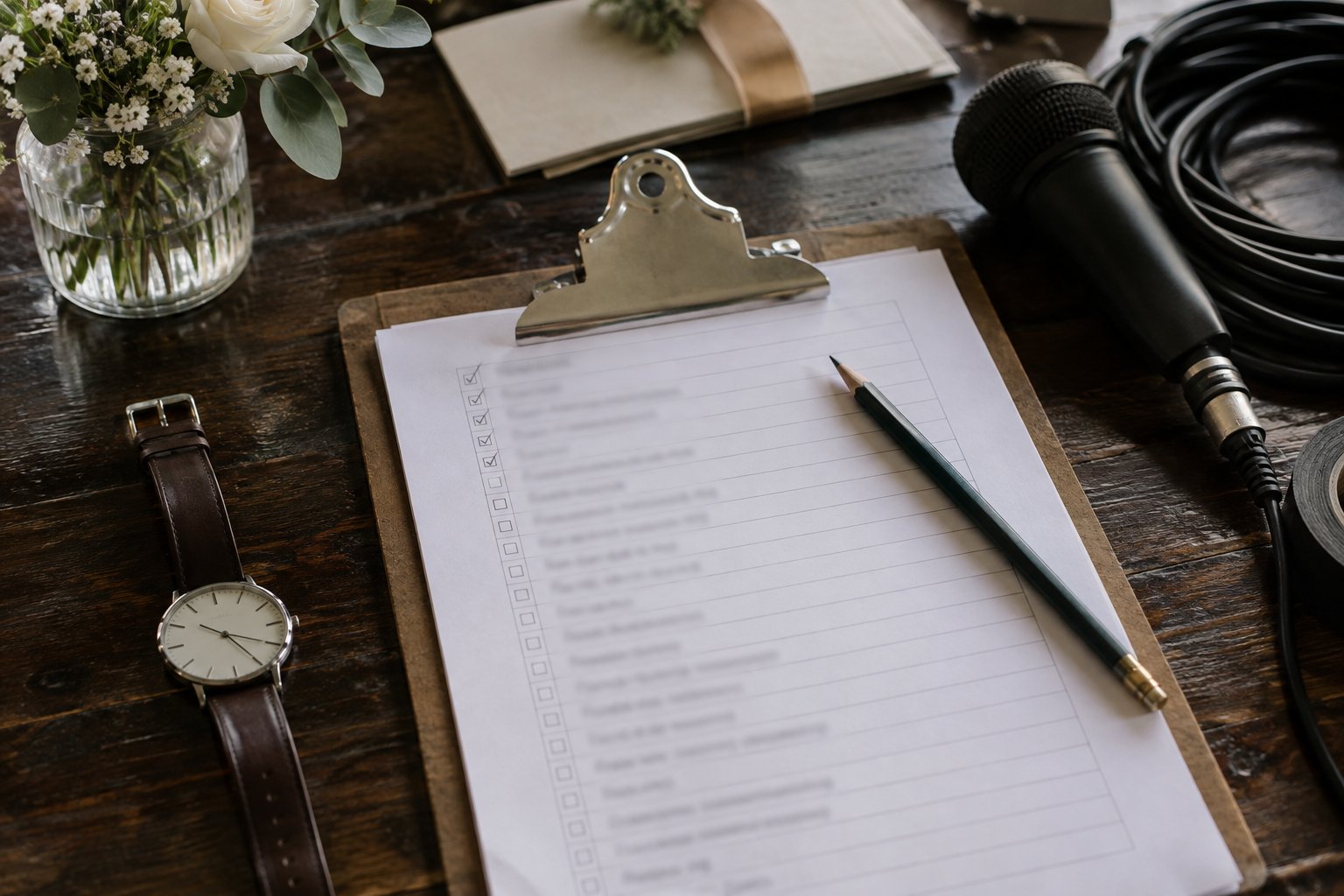
Start with a useful question
A ceremony checklist organized by owner and handoff. The Fieldbook treats every ceremony choice as one of four things: a requirement to check, a logistical dependency, a personal preference, or a custom that needs context. Keeping those labels visible prevents a checklist from becoming a script for someone else’s life.
Try naming what must be settled soon, what can wait, and who needs a real choice. Then place the answers into the Ceremony Decision Deck, where they become an editable draft rather than a fixed prescription.
Make the handoff explicit
A good ceremony brief gives each beat an owner: the couple, officiant, venue contact, reader, AV lead, or a trusted friend. It also records what needs a rehearsal. This is the core of the ceremony timeline approach and the handoff checklist.
From the desk
Checklists continue after the ceremony
A run sheet that stops at the recessional misses the filings. The filings after the ceremony covers the license return, the certified copies, and the order of a name change.
One line belongs on the list before the ceremony rather than after it: who asked the young readers whether they want a part, and who takes over if they change their mind. That conversation is set out in young readers in the run sheet.
From the desk
Notes on the desk
Next move
Put this into a rehearsal-ready brief.
The Decision Deck stores nothing by default. It turns the questions above into a local checklist, sequence, and vendor prompts.
Keep planning
Logistics
Wedding Ceremony Timeline
A workable run sheet is more useful than a perfect-looking plan.Logistics
Wedding Ceremony Budget Guide
Budget the ceremony by decisions and dependencies.
Logistics
Wedding Ceremony Date Planning
Choose a ceremony date with the people and conditions in view.
Logistics